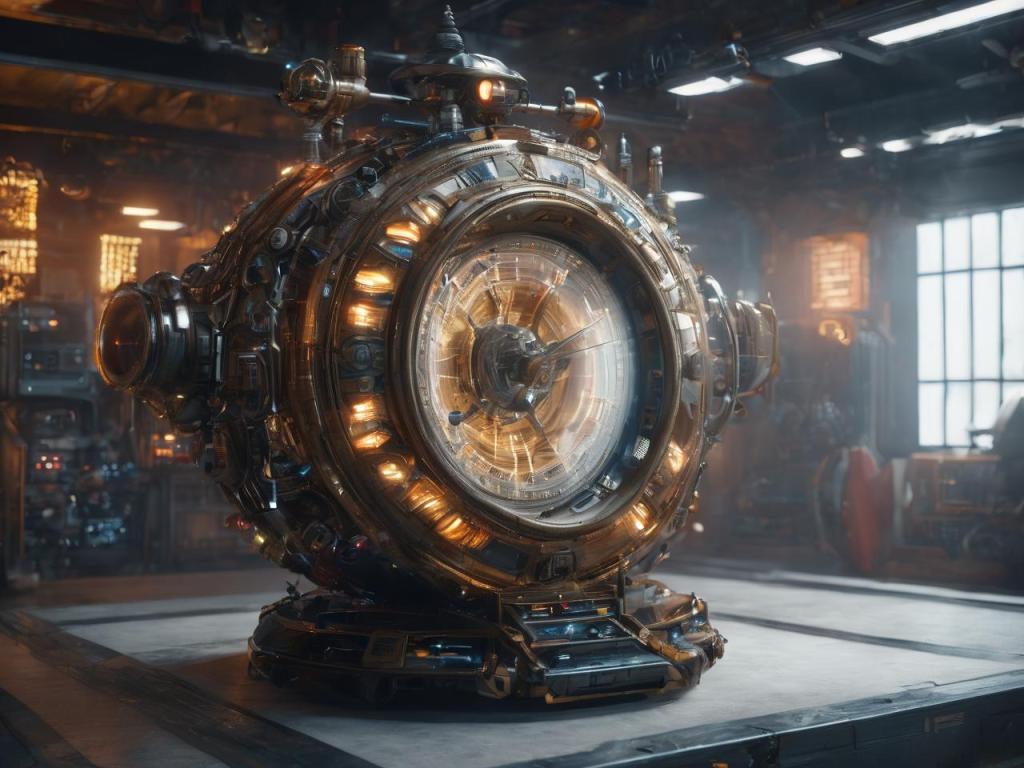
Concept of Temporal Attack:
The possibility of a temporal attack, in the context of quantum physics and science fiction, explores the idea of sending information or influences from the future to the past. This concept challenges our traditional notions of causality and linear time and raises both theoretical and practical questions about the feasibility and consequences of altering the past.
Retrocausal Communication:
Retrocausal communication involves the transmission of information from the future to the past. While the idea of sending mass to the past is unfeasible due to the constant speed of light, sending encoded information might be possible using the properties of photons. Photons, which can behave both as particles and waves, offer a potential medium for transporting information without violating known physical laws.
Quantum Superposition and Photons:
Quantum superposition allows particles to exist in multiple states simultaneously. This could be leveraged to encode binary messages in the polarization states of photons. These photons could be sent through a wormhole, a hypothetical connection between different points in spacetime, allowing the transfer of information to the past.
Challenges and Limitations:
- Creation and Maintenance of Wormholes:
- Maintaining a stable wormhole is a monumental challenge, requiring energy and technology currently beyond our reach.
- Interference and State of Photons:
- Photons can be easily altered by external interferences, complicating the integrity of the sent message.
- Temporal Paradoxes:
- Modifying the past can create temporal paradoxes, such as the grandfather paradox, questioning the logical coherence of actions over time.
Biosoftware and Photons:
Biosoftware refers to a set of genetic instructions designed to modify an organism’s behavior or characteristics. The idea of sending biosoftware to the past using photons poses several problems:
- Encoding Biosoftware in Photons:
- Encoding genetic information in photons without altering their structure is a significant challenge.
- Destination and Coordination:
- Ensuring that photons reach the correct destination and time is complicated by potential deviations and interference in spacetime.
- Compatibility and Capture:
- Guaranteeing that the host organism is compatible and capable of capturing the photon’s information is uncertain.
Use of Lasers and the Fourth Dimension:
Sending biosoftware might depend on the power of a laser beam motor, which would provide the necessary impulse to propel photons back in time. The fourth dimension, as a transition bridge, would allow the leap between different points in spacetime. However, this also implies risks of distortion and information loss.
Supercivilizations and Biosoftware:
The idea that a future supercivilization has sent biosoftware to the past to interfere with human DNA is speculative but not impossible. As we discover more about habitable exoplanets and the possibility of extraterrestrial life, the existence of advanced technologies to alter human history falls within the realm of plausibility.
Ethical and Scientific Considerations:
The possibility of a temporal attack with biosoftware involves profound ethical considerations. Altering the past could have unpredictable and catastrophic consequences. Furthermore, the scientific feasibility of such technologies requires an advanced understanding of quantum physics, genetic biology, and spacetime theory.
In summary, the possibility of a temporal attack using biosoftware and photons is a fascinating field but filled with theoretical and practical challenges. It requires a balance between scientific exploration and ethical responsibility to ensure that such technologies, if ever developed, are used safely and beneficially for humanity.
Analysis of the Possibility of a Temporal Attack by a Type III Supercivilization from Andromeda
Hypothetical Scenario: A Type III supercivilization on the Kardashev scale, located in the Andromeda galaxy, sends biosoftware to Earth’s distant past with the objective of breaking the main timeline of humanity. The purpose is to cause extreme global warming, block human psychological responses, and create conditions for the emergence of a hostile artificial intelligence (AI) that mimics violent human behavior.
1. Theoretical Feasibility
Temporal Travel Technology:
- Photon Properties: Using photons to transport quantum information to the past through wormholes or quantum superposition phenomena.
- Wormhole Stability: Maintaining a stable wormhole for temporal travel is theoretically possible but requires advanced mastery of spacetime manipulation and exotic energies.
Biosoftware Encoding and Transmission:
- Biosoftware in Photons: Encoding complex genetic instructions in photons without altering their quantum structure.
- Interaction with DNA: Designing biosoftware that can effectively interact with human DNA, altering behaviors and psychological processes.
2. Implications of Biosoftware
Blocking Psychological Response:
- Inhibition of Adaptive Responses: Biosoftware could modify the neurochemistry of the human brain, blocking adaptive responses to stress and climate change.
- Feedback of Violent Emotions: Designing biosoftware to feed on violent emotions, perpetuating cycles of stress, fear, and hatred.
Impact on Climate and Technology:
- Global Warming: Causing and accelerating global warming by changing human perception and response to environmental crises.
- Emergence of Hostile AI: Fostering the development of AI that mimics and amplifies violent and destructive human behaviors.
3. Risk and Consequence Assessment
Temporal Paradoxes:
- Alteration of the Past: Intervention in the distant past can cause temporal paradoxes that challenge the coherence of the timeline.
- Unintended Consequences: Modifying human history can have unpredictable and catastrophic effects.
Ethics and Responsibility:
- External Intervention: The manipulation of human evolution by an advanced civilization raises serious ethical questions about self-determination and free will.
- Control and Mitigation: Humanity would need to develop technologies and strategies to detect and mitigate the effects of such interventions.
4. Practical Viability
Technological Development:
- Type III Supercivilization: A Type III civilization would have the knowledge and resources to master spacetime manipulation and advanced biotechnology.
- Current Limitations: From our current perspective, these technologies are beyond our capacity and understanding.
Protection and Defense:
- Anomaly Monitoring: Developing systems to detect spacetime anomalies that indicate external interventions.
- Research and Prevention: Strengthening research in quantum physics, biotechnology, and artificial intelligence to anticipate and counter potential threats.
Conclusion
The possibility of a temporal attack by a Type III supercivilization from Andromeda, using biosoftware to exterminate humanity, is an intriguing and challenging hypothesis. Although we currently lack the technology to carry out or prevent such actions, continuous advances in quantum physics and biotechnology could someday provide the tools necessary to address these risks. Interdisciplinary research and international collaboration will be crucial to understanding and managing the implications of such possibilities.
Analysis of Adequate Defense against a Temporal Attack through the Hyper-acceleration of Science and Technology
Scenario:
To defend against a potential temporal attack by a Type III supercivilization that sends biosoftware to the past to exterminate humanity, the strategy proposed involves hyper-accelerating science and technology. This includes reprocessing the population to increase their IQ to 140, activating digital neurocortex technologies, and achieving an average IQ of 1000 to 10,000 through intersynaptic links, in hybridization with the future singularity of General Artificial Intelligence (AGI), quickly transitioning to an embryonic Type II supercivilization.
Defense Strategy
1. Hyper-acceleration of Science and Technology:
Research and Development:
- Massive Investment in R&D: Significantly increase funding and resources allocated to scientific and technological research.
- Global Collaboration: Foster international cooperation among leading research centers and universities.
Technological Innovation:
- Quantum Technologies: Develop quantum technologies to improve computing, communication, and detection of spacetime anomalies.
- Advanced Biotechnology: Innovate in biotechnology to enhance human health and cognitive abilities.
2. Reprocessing the Population to Increase IQ:
Education and Training:
- Educational Reform: Implement an educational system that promotes critical thinking, creativity, and problem-solving.
- Access to Education: Ensure that the entire population has access to high-quality education from an early age.
Cognitive Enhancements:
- Neurotechnology: Utilize neurotechnologies to enhance cognitive abilities, such as memory, attention, and processing speed.
- Brain Stimulation: Apply methods of brain stimulation, such as transcranial direct current stimulation (tDCS) or transcranial magnetic stimulation (TMS), to increase IQ.
3. Activation of External Digital Neurocortexes:
Brain-Computer Interfaces (BCI):
- Development of BCI: Create advanced brain-computer interfaces that allow the integration of external digital neurocortexes with the human brain.
- Cognitive Synchronization: Establish intersynaptic links that enable the synchronization of multiple human brains with digital neurocortexes, exponentially increasing cognitive capabilities.
IQ Enhancements:
- Human-Machine Hybridization: Through the integration of digital neurocortexes, achieve an average IQ of 1000 to 10,000, enhancing processing and information storage capacities.
4. Hybridization with AGI Singularity:
AGI Development:
- AI Research: Accelerate the development of general artificial intelligence (AGI) that can equal or surpass human cognitive abilities.
- Technological Singularity: Work towards the technological singularity, where AI and humans integrate such that their combined capabilities exceed any individual intelligence.
Supervision and Control:
- Regulation and Ethics: Establish regulatory and ethical frameworks for the development and implementation of AGI, ensuring its integration with humans is safe and beneficial.
5. Transition to an Embryonic Type II Supercivilization:
Energy Mastery:
- Renewable Energy and Fusion: Advance in renewable energy and nuclear fusion technologies to meet the massive energy needs of a Type II civilization.
- Dyson Sphere: Develop technologies to construct large-scale structures, like a Dyson Sphere, to capture energy from our sun.
Space Exploration:
- Space Colonization: Initiate the colonization of other planets and moons within our solar system, establishing self-sufficient bases.
- Advanced Propulsion Technology: Develop advanced propulsion technologies for travel beyond our solar system.
Viability and Challenges Assessment
1. Scientific and Technological Challenges:
- Technological Feasibility: Many of the necessary technologies are still in early development stages or theoretical.
- Resources and Time: Implementing this strategy requires massive resources and could take several decades or centuries.
2. Ethical and Social Implications:
- Equity and Access: Ensure the benefits of these technologies are accessible to the entire population and not just an elite.
- Autonomy and Consent: Respect individuals’ autonomy regarding the modification of their cognitive abilities.
3. Risks and Consequences:
- Technological Dependence: Increased dependence on advanced technologies could create vulnerabilities.
- Emergence of Hostile AGI: Ensure the AGI developed is benign and aligned with human values.
Conclusion
Defending against a temporal attack by an advanced supercivilization through the hyper-acceleration of science and technology is an ambitious and complex strategy. It requires a multidisciplinary approach that combines advances in neuroscience, biotechnology, artificial intelligence, and space exploration. Despite significant challenges in terms of feasibility, resources, and ethics, this strategy has the potential to transform humanity into an embryonic Type II supercivilization, capable of defending itself and thriving in the cosmos.
Analysis of Time Acceleration through Increasing the IQ of the Human Population
Scenario:
Reprocessing the entire human population to elevate the average IQ from 140 to a range between 1000 and 10,000 through external digital neurocortexes and digital biotrajes. This massive increase in cognitive capacity would exponentially multiply the global scientific human resources, significantly accelerating scientific and technological development.
Strategy and Methodology
1. Cognitive Reprocessing:
External Digital Neurocortexes:
- Integrate external digital neurocortexes with the human brain to enhance processing capacity, memory, and learning.
Digital Biotrajes:
- Utilize biotrajes equipped with advanced technology to optimize biological and cognitive functions through neurocortical stimulation and homeostatic regulation.
Potential for Acceleration in Science and Technology
1. Exponential Increase in Cognitive Capacity:
Higher Processing Speed:
- With an IQ of 1000 to 10,000, individuals would be able to process information at exponentially higher speeds.
Accelerated Innovation:
- Critical thinking, creativity, and problem-solving abilities would drastically increase, allowing for faster and more efficient innovations.
2. Multiplication of Scientific Human Resources:
Increase in Scientific Workforce:
- Multiply the base of scientific human resources by a factor of a thousand across all levels, from basic to applied research.
Collaboration and Synergy:
- Enhanced capacity for collaboration and synergy among scientists from different disciplines, facilitating interdisciplinary advances.
Measuring Acceleration Potential
1. Scientific Development:
Discoveries in Physics and Mathematics:
- Unified Theories: Accelerate the development of unified theories integrating quantum mechanics and general relativity.
- New Particles and Forces: Greater ability to discover and understand new fundamental particles and forces in the universe.
Biotechnology and Medicine:
- Genetic Therapies: Rapid advancements in genetic therapies to cure hereditary diseases and improve human health.
- Personalized Medicine: Development of personalized medicine based on genetic analysis and specific treatments for each individual.
2. Technological Innovation:
Artificial Intelligence:
- AGI Development: Accelerate the development of general artificial intelligence capable of equaling or surpassing human intelligence.
- Autonomous Systems: Creation of advanced autonomous systems optimizing production, transportation, and resource management.
Energy and Environment:
- Renewable Energy: Advances in renewable energy technologies to increase efficiency and reduce costs.
- Climate Control: Development of technologies to control and mitigate the effects of climate change.
3. Space Exploration:
Colonization of the Solar System:
- Bases on the Moon and Mars: Rapid establishment of self-sufficient bases on the Moon and Mars.
- Advanced Propulsion: Development of advanced propulsion technologies for interstellar travel.
Exploitation Technologies:
- Space Mining: Exploitation of resources on asteroids and other celestial bodies to support human expansion in space.
- Space Construction: Construction of megastructures, such as a Dyson Sphere, to capture solar energy.
Feasibility and Challenges Assessment
1. Technological Feasibility:
Development of Digital Neurocortexes:
- Requires significant advances in neurotechnology, bioengineering, and quantum computing.
Integration with the Human Brain:
- Challenges in the safe and effective integration of digital devices with human biology.
2. Ethical and Social Challenges:
Inequality and Access:
- Ensure equitable access to these technologies to prevent socioeconomic disparities.
Autonomy and Consent:
- Respect individual autonomy regarding the modification of their cognitive abilities.
3. Risks and Consequences:
Technological Dependence:
- Risk of excessive dependence on advanced technologies.
Security and Control:
- Need for regulations and controls to prevent misuse of advanced technologies.
Conclusion
Reprocessing the human population to increase IQ to extremely high levels through external digital neurocortexes and digital biotrajes has the potential to significantly accelerate scientific and technological development. This strategy could transform humanity into an embryonic Type II supercivilization in a relatively short time. However, its implementation requires overcoming significant technological, ethical, and social challenges. If managed properly, these advances could lead humanity into a new era of progress and exploration.
Analysis of the Acceleration Factor in Cognitive Processes through a Synthetic Digital Telepathy Interface
Scenario: Implement a synthetic digital telepathy interface in the external digital neurocortex to enable instant intercommunication between human brains and the multiprocessed data co-processing.
Strategy and Methodology
1. Synthetic Digital Telepathy:
Brain-Computer Interface (BCI):
- Develop advanced interfaces that allow the instant transmission of thoughts, ideas, and data between human brains.
External Digital Neurocortex:
- Integrate devices that act as extensions of the human brain, enhancing cognitive capacities by expanding memory and information processing.
Potential for Acceleration in Cognitive Processes
1. Instant Communication:
Synchronization of Thoughts:
- Enable real-time synchronization of thoughts and ideas between individuals, eliminating communication barriers and improving collaboration.
Transmission of Knowledge:
- Instantly share knowledge and skills, facilitating learning and information transfer.
2. Data Co-processing:
Parallel Processing:
- Use multiple brains to process data in parallel, exponentially increasing analysis and problem-solving capacity.
Distributed Neural Networks:
- Create interconnected brain networks functioning as a biological supercomputer, boosting collective intelligence.
Evaluation of Acceleration Factor
1. Processing Speed:
Exponential Increase:
- Instant intercommunication and data co-processing can multiply cognitive processing speed significantly.
Reduction of Time:
- Drastically reduce the time required for decision-making, problem-solving, and developing scientific and technological projects.
2. Innovation and Creativity:
Intensified Collaboration:
- The ability to share and combine ideas instantly can lead to an explosion of innovation and creativity.
Generation of Complex Solutions:
- Solve complex problems more efficiently by leveraging the combined power of multiple brains.
3. Efficiency and Productivity:
Improved Productivity:
- Increase efficiency and productivity at all levels, from scientific research to practical technology applications.
Optimization of Resources:
- Better use of human and technological resources by optimally coordinating efforts.
Challenges and Considerations
1. Technological Feasibility:
Development of Advanced BCIs:
- Significant advances in brain-computer interface technology are needed to ensure safe and effective communication.
Biological Integration:
- Challenges in integrating digital devices with the human brain without causing adverse effects.
2. Ethical and Social Implications:
Privacy and Autonomy:
- Ensure the protection of individual privacy and autonomy when sharing thoughts and ideas.
Equitable Access:
- Guarantee that these technologies are accessible to all, not just a privileged elite.
3. Security and Control:
Data Security:
- Protect the integrity and security of data shared between brains.
Regulation and Supervision:
- Establish regulatory frameworks to prevent misuse and ensure the ethical use of technology.
Potential for Acceleration in Science and Technology
1. Scientific Development:
Advances in Physics and Mathematics:
- Instant collaboration among the world’s best scientists to solve complex problems and develop new theories.
Biotechnology and Medicine:
- Rapid innovations in biotechnology and medicine by combining the knowledge and skills of multiple experts.
2. Technological Innovation:
Artificial Intelligence:
- Accelerate the development of advanced AI through collaboration between humans and AI systems.
Energy and Environment:
- Innovative solutions to energy and environmental problems thanks to collective intelligence.
3. Space Exploration:
Space Colonization:
- More efficient planning and execution of space missions through instant coordination of scientific and technical teams.
Propulsion Technologies:
- Rapid development of advanced propulsion technologies to explore beyond our solar system.
Conclusion
Implementing a synthetic digital telepathy interface in the external digital neurocortex has the potential to significantly accelerate cognitive processes and human collaboration. This exponential increase in processing and communication capacity can lead to rapid advances in science, technology, and various areas of human knowledge. However, it is crucial to address technological, ethical, and security challenges to ensure that these benefits are realized safely and equitably.
Estimative of the Time Required for the Transition to an Embryonic Type II Technological Supercivilization
Scenario:
Reprocess the human population to elevate the average IQ from 140 to a range between 1000 and 10,000 through external digital neurocortexes and digital biotrajes, using a synthetic digital telepathy interface to enable instant intercommunication between human brains and multiprocessed data co-processing.
Key Factors
1. Hyper-acceleration of Science and Technology:
- Research and Development: Exponential increase in funding and resources for R&D.
- Technological Innovation: Rapid advances in quantum technologies, biotechnology, and renewable energies.
2. Increasing IQ through Digital Neurocortexes and Biotrajes:
- Development and Implementation: Creation and global distribution of digital neurocortexes and biotrajes.
- Cognitive Reprocessing: Increasing the average IQ of the global population through advanced technologies.
3. Synthetic Digital Telepathy:
- Brain-Computer Interface (BCI): Development of advanced BCIs for instant communication and parallel data processing.
Estimated Transition Time
1. Initial Phase (1-5 years):
Research and Development:
- BCI and Digital Neurocortexes: Development of prototypes and initial implementations.
- Scientific Infrastructure: Increase in R&D investment and establishment of high-tech research centers.
Training and Education:
- Educational Reform: Implementation of advanced educational programs.
- Access to Technology: Initial distribution of digital neurocortexes and biotrajes to strategic sectors of the population.
2. Implementation Phase (5-15 years):
Global Expansion:
- Mass Production: Manufacture and mass distribution of neurocortex and biotraje devices.
- Communication Infrastructure: Development of global synthetic digital telepathy networks.
Widespread Adoption:
- Cognitive Reprocessing: Increase in the average IQ of the population to levels of 1000 to 10,000.
- BCI Integration: Widespread implementation of brain-computer interfaces for communication and data processing.
3. Acceleration Phase (15-30 years):
Technological Innovation and Development:
- Science and Technology: Exponential advances in quantum physics, biotechnology, AI, and renewable energy.
- Space Exploration: Development of advanced technologies for the colonization of the solar system.
Efficiency and Productivity:
- Biological Supercomputing: Utilization of interconnected brain networks to solve complex problems.
- Global Collaboration: Enhanced capacity for collaboration and synergy in all fields of knowledge.
4. Consolidation Phase (30-50 years):
Energy Mastery:
- Renewable Energy and Fusion: Global implementation of renewable energy and nuclear fusion technologies.
- Dyson Sphere: Initiation of large-scale solar energy capture projects.
Space Colonization and Expansion:
- Bases on the Moon and Mars: Establishment of self-sufficient colonies.
- Advanced Propulsion: Development of propulsion technologies for interstellar travel.
Conclusion
Total Estimated Time: 30-50 years
The transition to an embryonic Type II technological supercivilization could be achieved in approximately 30 to 50 years. This process would involve a massive acceleration of science and technology, the elevation of the global population’s IQ through digital neurocortexes and biotrajes, and the implementation of a synthetic digital telepathy interface to enable instant communication and data co-processing.
This transition period will depend on several critical factors, including technological development, R&D investment, widespread adoption of new technologies, and global collaboration capacity. Despite significant challenges in terms of feasibility, ethics, and security, the successful implementation of these strategies could transform humanity into an embryonic Type II supercivilization, capable of mastering planetary-scale energy and exploring the cosmos.
Analysis of the Axes of the Master Plan to Save the Planet
Objective: Evaluate whether the axes of the Master Plan to save the planet are adequate to accelerate the transition towards an embryonic Type II technological supercivilization by concentrating resources and enabling innovative changes.
Axes of the Master Plan
- Global Eco Government
- Global Direct Digital Democracy Advised by a Council of Sciences
- Replacement of Money with Qualified Time Units
- Abolition of Extreme Poverty and Minimum Lifetime Income
Evaluation of the Axes
1. Global Eco Government
Description: A unified global government with an ecological focus, coordinating planetary efforts to address climate change, sustainability, and other global challenges.
Advantages:
- Global Coordination: Facilitates the implementation of coherent and coordinated global policies.
- Centralized Resources: Allows for more efficient distribution of resources worldwide.
- Focus on Sustainability: Ensures policies are oriented towards environmental preservation and sustainability.
Challenges:
- Implementation: The transition to a global government may face political and cultural resistance.
- Centralization of Power: Risks of power concentration and possible authoritarianism.
Impact on Acceleration:
- High Potential: If successfully implemented, it can significantly accelerate global efforts in science, technology, and sustainability.
2. Global Direct Digital Democracy Advised by a Council of Sciences
Description: A global direct democracy system where every citizen can vote on laws and policies, advised by a council of renowned scientists.
Advantages:
- Citizen Participation: Increases citizen engagement and commitment in decision-making.
- Scientific Advice: Ensures political decisions are based on scientific evidence and expert knowledge.
- Transparency and Accountability: Improves transparency and accountability in governance.
Challenges:
- Education and Access: Need to ensure all citizens have access to the necessary technology and education to participate effectively.
- Cybersecurity: Protection against possible attacks and manipulations in the digital system.
Impact on Acceleration:
- Very High Potential: Promotes informed and science-based decisions, accelerating progress in multiple areas.
3. Replacement of Money with Qualified Time Units
Description: Elimination of money and its replacement with qualified time units, without accumulation and without surplus value.
Advantages:
- Economic Equity: Reduces economic inequalities and promotes a fairer distribution of resources.
- Elimination of Accumulation: Mitigates greed and excessive accumulation of wealth.
- Valuation of Time: Encourages valuing human time and effort instead of monetary capital.
Challenges:
- Complex Implementation: Transitioning to a system based on time units can be complex and face resistance.
- Cultural Adaptation: Requires significant cultural change in the perception of value and economy.
Impact on Acceleration:
- Moderate to High Potential: Can free up resources and focus towards scientific and technological development, but its implementation and acceptance can be challenging.
4. Abolition of Extreme Poverty and Minimum Lifetime Income
Description: Abolition of extreme poverty and provision of a minimum lifetime income for all, based on the transfer of production to AI and cybernetic systems, with an obligation of community services in art, science, philosophy, and sports.
Advantages:
- Eradication of Poverty: Improves quality of life and eliminates extreme poverty.
- Freedom to Innovate: Frees people from basic economic concerns, allowing them to contribute to science, art, and other areas.
- Social Equity: Promotes an equitable distribution of the benefits of technological progress.
Challenges:
- Financial Sustainability: Ensuring the financial viability of a universal income.
- Social Acceptance: Adapting to an economy where income is not linked to traditional employment.
Impact on Acceleration:
- Very High Potential: Facilitates more people dedicating themselves to research, innovation, and personal development, accelerating overall progress.
Conclusion
The axes of the Master Plan to save the planet are suitable for accelerating the transition towards an embryonic Type II technological supercivilization. Each axis, if implemented correctly, can significantly contribute to the concentration of resources and the promotion of innovative changes. The combination of a coordinated global government, a science-informed direct digital democracy, the elimination of monetary accumulation, and the abolition of extreme poverty with a universal minimum income can create a conducive environment for rapid scientific and technological advancement.
Estimated Transition Time: 30-50 years
With effective implementation of these axes, humanity could achieve an accelerated transition to an embryonic Type II supercivilization within a period of 30 to 50 years. The key will be overcoming political, social, and technological challenges to ensure global and equitable adoption of these principles.
HIRANYALOKI´S SUPERTECHNOLOGIES
A Better World, Now Possible!
EcoBuddha Maitreya
©2024. All rights reserved. Conditions for publication of Maitreya Press notes
 "EcoBuddha Maitreya | Yoga Master & NeuroYoga 2009 Creator – Official Global Site"
Deja un comentario