Use of Rogolith-Based Replicating Nanomaterials as Catalysts
Definition and Function of Replicating Nanomaterials
Replicating nanomaterials based on lunar rogoliths act as photovoltaic panels or batteries, taking advantage of the materials available on the Moon to create structures that capture and convert solar energy into electricity. These nanomaterials can be designed to replicate and self-assemble, forming large solar collection surfaces.
Solar Energy Capture Process
1. Rogolith Collection: Lunar rogoliths are collected and processed into nanomaterials using replication technology.
2. Formation of Photovoltaic Surfaces: These nanomaterials self-assemble into photovoltaic surfaces capable of efficiently capturing and converting solar energy into electricity.
3. Energy Storage: The captured energy is stored in advanced high-capacity batteries for later transmission.
Absorption and Retransmission of Energy through Tesla Antennas
Principles of Operation of Tesla Antennas
Tesla antennas, also known as Tesla coils, work by creating resonant fields that allow the wireless transmission of electrical energy through the air or the vacuum of space.
Absorption and Retransmission Process
1. Energy Capture: Solar energy converted into electricity by photovoltaic nanomaterials is channeled to the Tesla antennas.
2. Creation of Resonant Field: Tesla antennas generate a resonant field, absorbing electrical energy and preparing it for transmission.
3. Transmission to Earth: Energy is transmitted from the Moon to receiving stations on Earth using microwave waves or laser beams, optimizing transfer efficiency.
Using Lasers to Power Ships with Return Sails to Earth
Principles of Laser Propulsion
1. Laser Beam Generation: Part of the captured energy is converted into high-power laser beams using advanced laser emitters.
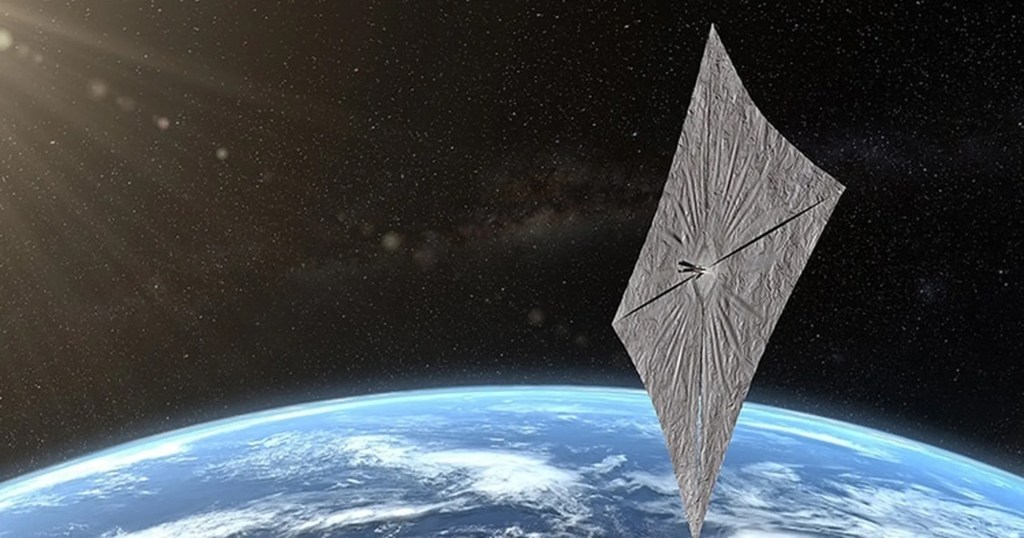
2. Spacecraft Boost: These laser beams are directed toward spacecraft equipped with photonic sails, which capture the laser energy and use it for propulsion.
3. Control and Direction: The direction and intensity of the laser beams are controlled to guide the spacecraft to their destinations, whether in lunar orbit, towards Earth or beyond.
Advantages of Laser Propulsion
• Energy Efficiency: Lasers can transmit energy precisely and efficiently over long distances.
• Precise Control: Allows precise control of the speed and direction of spacecraft.
• Sustainability: Uses captured solar energy, reducing dependence on chemical fuels.
Challenges and Technical Considerations
• Conversion Efficiency: Optimize the conversion efficiency of solar energy to electricity and then to microwaves or lasers.
• Energy Transmission: Minimize energy losses during transmission from the Moon to Earth.
• Safety: Ensure that the transmission of energy using microwaves or lasers does not cause harm to people, equipment or the environment.
• Infrastructure: Develop and maintain the necessary infrastructure on both the Moon and Earth for the capture, storage and transmission of energy.
Conclusion
The use of replicating nanomaterials based on lunar rogoliths as catalysts to capture solar energy and the transmission of this energy through Tesla antennas is an innovative and viable solution. Laser propulsion technology offers an efficient and controllable way to propel spacecraft, powering future exploration and return missions. This approach requires significant advances in nanomaterials, energy storage and transmission technologies, but has the potential to revolutionize the harnessing of lunar solar energy and its application in space exploration.
The lunar surface receives approximately 1.235×10>15 kilowatt-hours of solar energy per day.
Humanity consumes approximately 129.4×10>12 kilowatt-hours of energy per day.
The Moon receives approximately 9.54 times more solar energy per day than humanity’s total daily energy consumption.
The solar energy received by the Moon in one day is approximately 229 times greater than humanity’s hourly energy consumption.
HIRANYALOKI´S SUPERTECHNOLOGIES
A Better World, Now Possible!
EcoBuddha Maitreya
©2024. All rights reserved. Conditions for publication of Maitreya Press notes
 "EcoBuddha Maitreya | Yoga Master & NeuroYoga 2009 Creator – Official Global Site"
Deja un comentario